President Chris Eckert called the meeting to order.
After the Pledge of Allegiance, John deRussy reaffirmed the guidance principles of Rotary:
- objectives - develop acquaintances and opportunity for services.
- four-way test - ethical standards for business and professions.
- avenues of service - application of ideals for service.
Kristin Jensen led a sing-along of Homeward Bound.
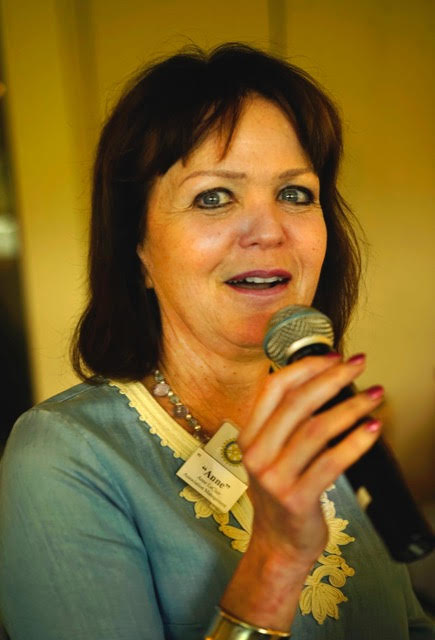
The newscast was given by Anne LeClair.
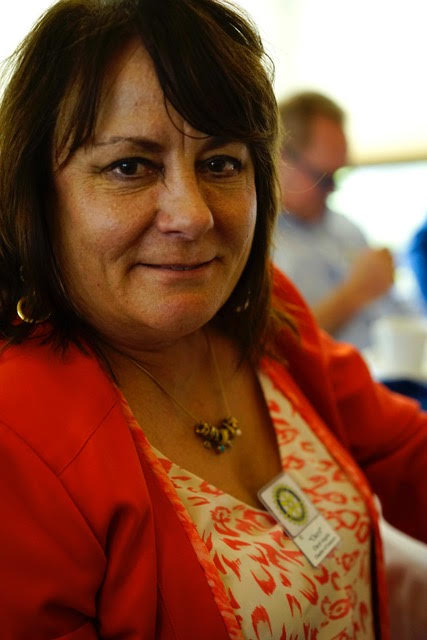
Cheryl Angeles reported that all is sunny in Rotary land, with no one sick or in hospital.
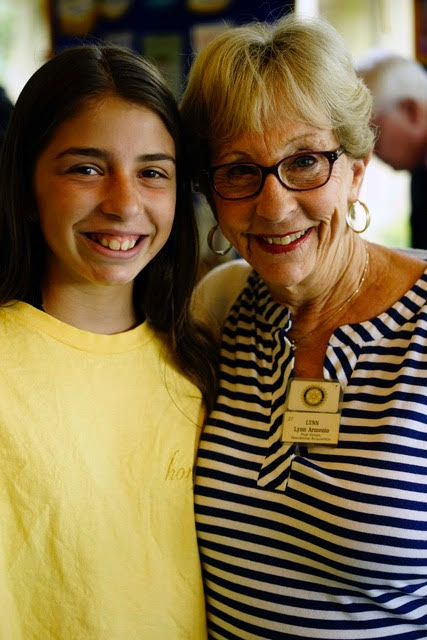
Lynn Armenio introduced visiting Rotarians: Jeri Fujimoto, past district governor, and Nachu Papa from Los Angeles.
Guests and Rotarian hosts included:
- Fun Run on October 22 at Seal Point Park - Alan Talansky and Juan Raigoza will match the first $3,500 raised for the Fun Run. This is an important fundraiser for the scholarship foundation.
- Jeff Lowenstein reminded members to pay their annual dues.
- Cheryl Angeles encouraged everyone to sign up for the Business Emergency Response panel discussion on August 25 at Poplar Creek Grill.
It was made clear that unlike the democracy enjoyed by San Mateo Rotarians during President Tony’s term last year, President Chris is establishing a benign dictatorship. The newly inducted members of the Dictatorship Club were:
Speaker:
Tony Villanueva introduced Speaker Jim Carriere, Board of Directors of Shelter Box USA. Jim is a graduate of Louisiana State University and lives in Oakland.
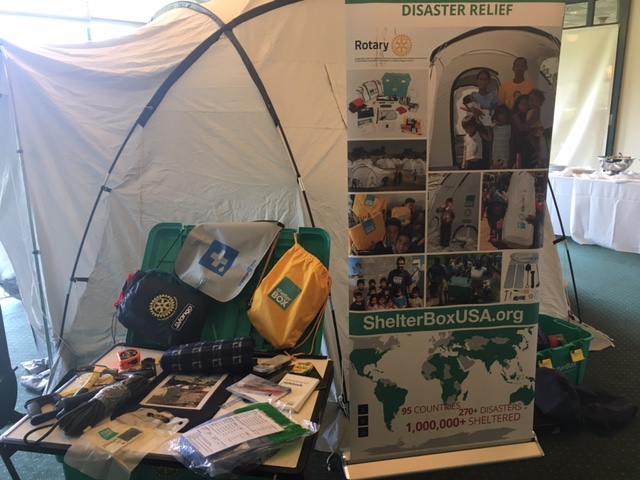
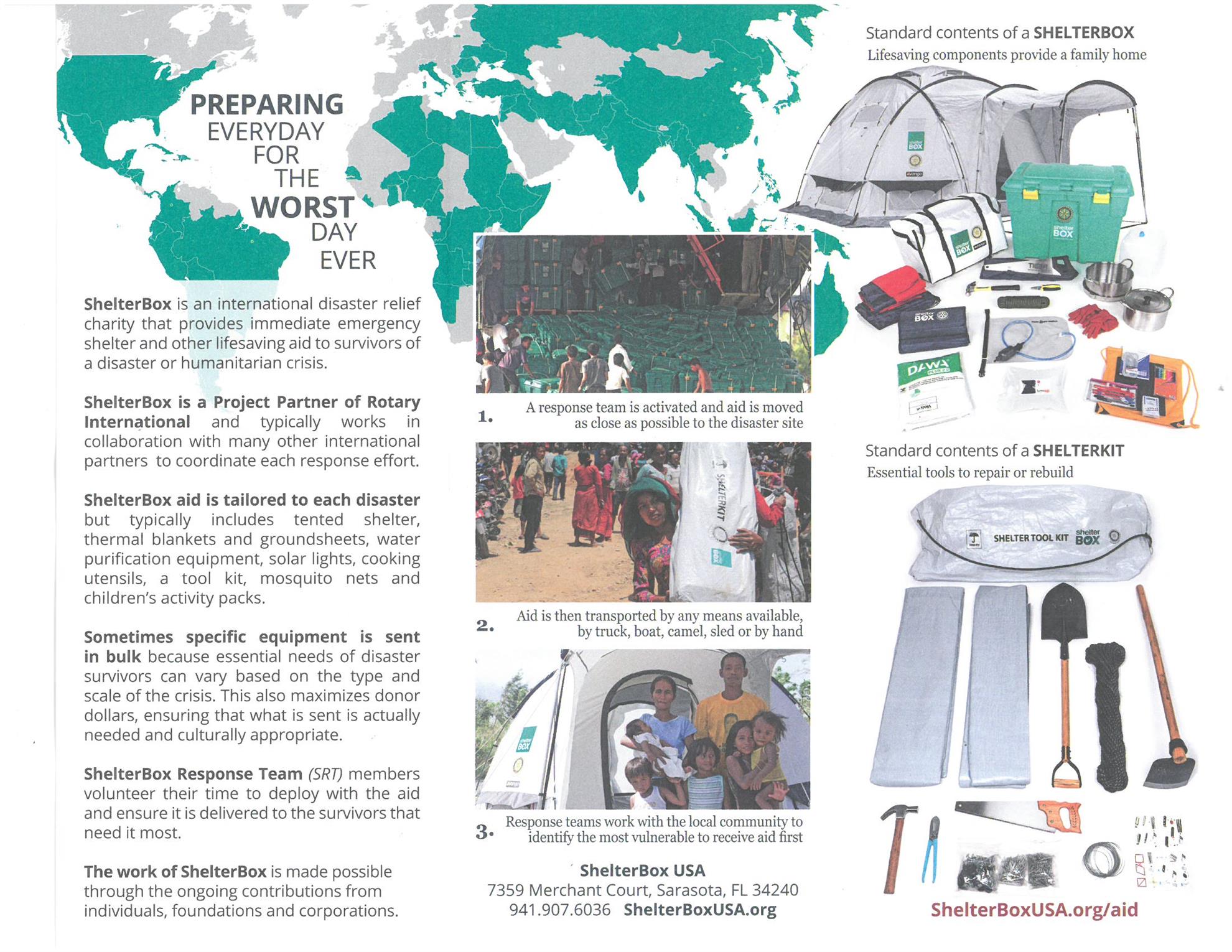
Shelter Box is a disaster relief program started by a Rotarian in 2012. There are 85 million people displaced each year by disaster; more and more the disasters are manmade instead of natural. Shelter Box USA is Rotary International's choice for disaster relief.
Shelter Box responds to about 24 disasters a year in coordination with other entities. The Response Teams participate in cluster meetings moderated the UN, and don’t go where they’re not wanted. Shelter Box insists on conducting their own deployments when invited by the local government or the organization in charge. The aid boxes are delivered by any means possible, and aids are targeted to what's happening and needed on the ground. The Response Teams have the experience to get through custom, decide on the distributions, set up, and ensure the boxes don't end up on the local black market. Every deployment is different. The Aid Box weighs about 130 lbs containing a weather-proof tent, LuminAID solar light, shelter kit, and a kid pack (color books, crayons, etc).
The largest deployments by Shelter Box includes aids in response to:
- Boxing Day Tsunami
- Haiti 2010
- Japan 2011 earthquake
- Typhoon Haitian
- Nepal earthquake 04/2015
- Malawi flooding 2015 - 250 boxes
- Fuji cyclone Winston 2016
- Hurricane Katrina 2005
The Shelter Box Hero Program is a 3-years giving commitment for volunteers, requiring 1 month of deployment every year. Members of Response Team go through a grueling 1 year training. A Rotarian volunteer gave testimony to her work with the organization, specifically her deployment in Fuji in 2016. She spoke of the extreme versatility of the aid boxes. In Fuji, the empty boxes were used to deliver desalinated water to the people from the boats since there is no source of fresh water on the small island.